Understanding Types of Business Organisations
When starting a business, choosing the right organisational structure is crucial. Each type comes with unique responsibilities, benefits, and challenges. Here’s a quick guide:
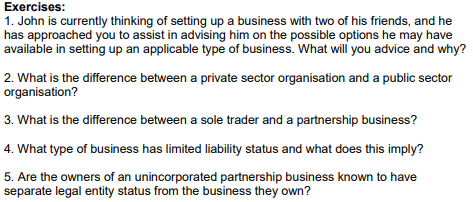
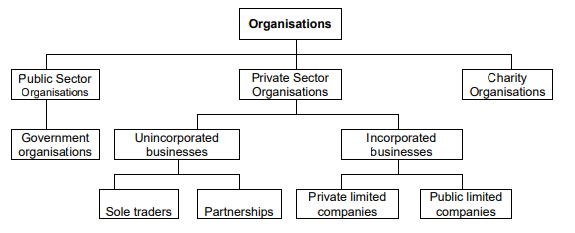
Public Sector Organisations
- Run by the government to deliver essential services like healthcare, education, and policing.
- Funded through taxes and national insurance.
- Not profit‑driven, focused on public welfare.
Voluntary & Not‑for‑Profit Organisations
- Includes charities and community groups.
- Aim to serve society rather than generate profit.
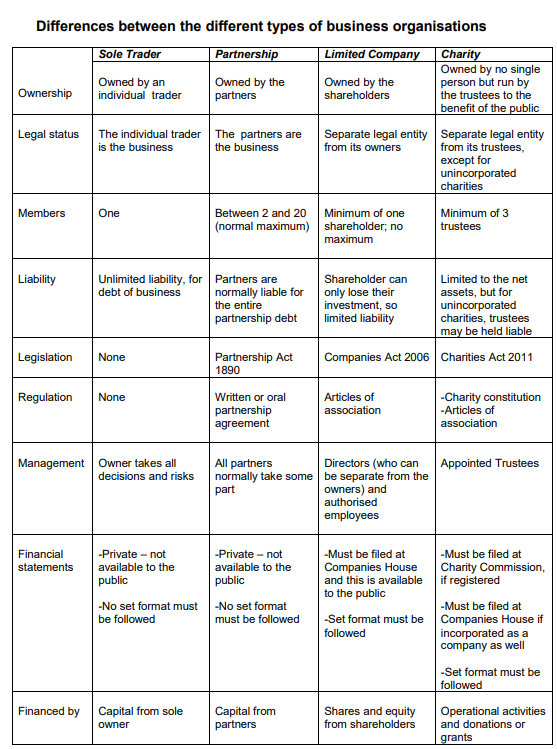
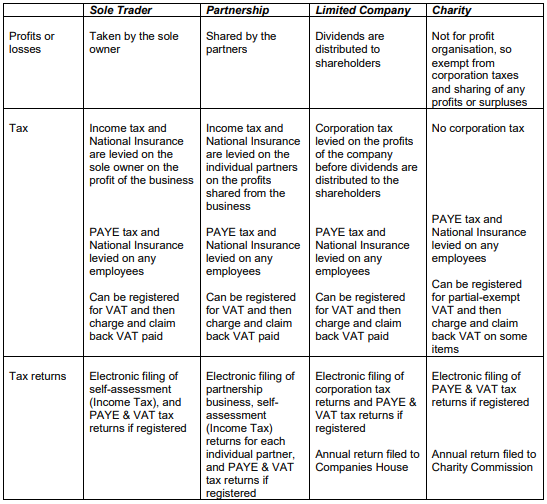
- Registered charities must comply with the Charities Act, file annual returns, and are exempt from corporation tax.
- Managed by trustees who ensure compliance and accountability.
Private Sector Organisations
These are profit‑oriented and can be structured in different ways:
Sole Traders
- Owned and run by one individual.
- Simple to set up, low costs, and full control.
- Unlimited liability: personal assets may cover business debts.
- Limited growth potential and challenges in raising capital.
Partnerships
- Owned by two or more people.
- Governed by the Partnership Act 1890 or a partnership agreement.
- Profits shared according to agreed ratios.
- Advantages: pooled expertise, shared workload, easier access to funds.
- Disadvantages: unlimited liability, potential disputes, and reliance on partners’ circumstances.
Limited Companies
- Separate legal entities distinct from their owners (shareholders).
- Liability is limited to the company’s resources.
- Private Limited Companies (Ltd): Shares not publicly traded, flexible ownership.
- Public Limited Companies (Plc): Shares traded on stock exchanges, stricter requirements, minimum £50,000 share capital.
- Limited Liability Partnerships (LLP): Hybrid structure offering limited liability with partnership flexibility, popular among professionals.
Pros & Cons of Limited Companies
- Pros: Limited liability, easier to raise finance, continuity, transferable shares.
- Cons: Complex regulations, mandatory public accounts, audits, and compliance with the Companies Act 2006.
Rights of Shareholders
Under the Companies Act 2006, shareholders can:
- Vote at general meetings.
- Receive share certificates.
- Inspect registers and directors’ service contracts.
Test Your Knowledge With These Exercises!