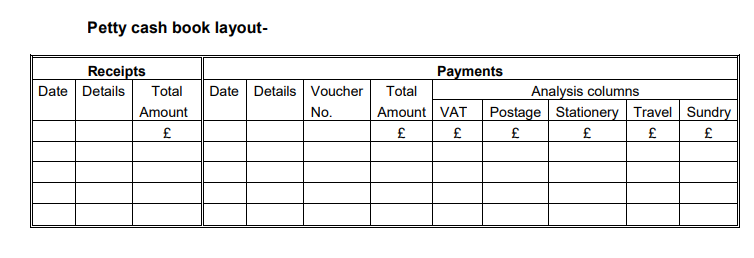
Many businesses use a petty cash system to manage small business payments. These payments are too small for writing a cheque. For example:
- Tea, coffee, and milk for the staff kitchen
- Window cleaning fees
- Other minor expenses
A staff member usually manages the petty cash float. This person is responsible for:
- Giving money to staff for small expenses
- Reimbursing staff who pay for business-related purchases from their own money
Funding and Receipts
Businesses top up petty cash from the cash book or bank. Sometimes, petty cash also receives small-value sales receipts, like stamps sold to staff.
It is important to follow these rules:
- Never use petty cash for personal expenses
- Always comply with the organisation’s policies
Petty Cash Vouchers
Most businesses use petty cash vouchers to record spending. Each voucher should include:
- Amount claimed
- Purpose of the purchase
- Date of the transaction
- Manager approval
Additional steps:
- Attach receipts to vouchers
- Number vouchers and store them in the petty cash box
- Use vouchers to complete the petty cash book
- File vouchers for future reference
Policies and Limits
Businesses may have different petty cash rules, but common policies include:
- Vouchers must have receipts or proof of expense
- Set a maximum amount allowed for petty cash payments
- Certain small claims may not require proof
Always follow the petty cash policy when recording transactions.
Accounting and Bookkeeping
In accounting, the petty cash book can act as:
- A book of prime entry
- A ledger account
This approach helps businesses keep accurate petty cash records within the double-entry bookkeeping system.